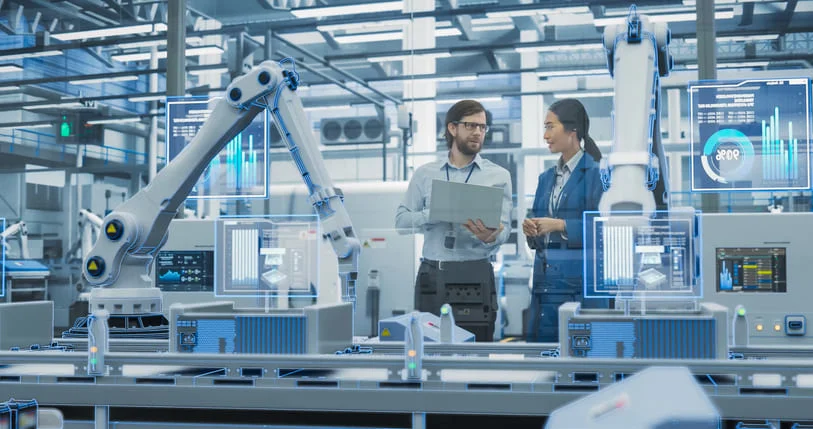
The landscape of modern commerce is undergoing a quiet but profound transformation. Across nearly every sector, from global logistics networks to localized professional services, the traditional mechanics of daily operations are being fundamentally rewritten. This evolution is driven by the rapid maturation and integration of digital automation tools. Processes that once required hours of manual labor, meticulous administrative oversight, and multi-layered human verification are now executed seamlessly in milliseconds.
This operational shift goes far beyond the historical pursuit of simple cost reduction. Today, automation serves as a primary strategic pillar for organizations seeking to navigate labor shortages, mitigate human error, and achieve unprecedented levels of systemic scalability. By delegating repetitive, rule-based workflows to specialized software engines, enterprises can transition their human workforces away from administrative maintenance and toward high-value, strategic innovation.
The Modern Automation Stack: From Simple Scripts to Intelligent Workflows
To understand how deeply automation is embedded in daily workflows, it is necessary to examine the modern technology stack that powers these operations. Automation is no longer confined to basic macro commands or isolated software integrations. Instead, contemporary business infrastructure relies on an interconnected ecosystem of technologies designed to handle varying levels of operational complexity.
At the foundational layer, Robotic Process Automation manages structured, repetitive digital tasks. These software robots mimic human interactions with digital systems, such as copying data from a spreadsheet into an enterprise resource planning system or migrating customer records between siloed databases.
Above this foundational layer sits Business Process Automation, which orchestrates complex, end-to-end organizational workflows. This technology connects disparate departments, ensuring that information flows smoothly from sales to finance, or from procurement to inventory management, without requiring human intervention to pass the torch.
At the apex of this stack is Intelligent Process Automation, which infuses artificial intelligence and machine learning into automated systems. This enables tools to handle unstructured data, interpret natural language, and make contextual decisions, allowing automation to move from rigid rule-following to dynamic problem-solving.
Transforming the Financial and Accounting Ecosystem
Historically, corporate finance and accounting departments were burdened by administrative paperwork, manual data entry, and lengthy reconciliation cycles. The traditional end-of-month financial close was a notorious operational bottleneck, frequently demanding massive amounts of overtime and pulling financial analysts away from core strategic forecasting.
Modern automation tools have entirely restructured these workflows. Intelligent invoice processing systems utilize advanced optical character recognition coupled with machine learning to scan incoming billing documents, extract key line items, match them against purchase orders, and automatically route them to the ledger for payment.
-
Real-Time Expense Reconciliation: Corporate expense management platforms automatically categorize employee credit card transactions, flag policy violations via algorithmic pattern recognition, and sync data instantly with central accounting software.
-
Continuous Auditing Frameworks: Rather than relying on sporadic, retrospective quarterly audits, automated financial systems continuously scan transaction streams for anomalies, fraud risks, or compliance deviations, ensuring continuous financial hygiene.
-
Automated Collections Processes: Accounts receivable platforms monitor payment timelines, automatically generating tailored follow-up communications to clients as due dates approach, which significantly compresses the average cash conversion cycle.
By eliminating manual transaction processing, financial leadership can pivot their focus toward real-time capital allocation, risk modeling, and long-term economic forecasting.
Redefining Human Resources and Talent Acquisition
The human resources sector has traditionally been characterized by high-volume administrative tasks, complex documentation management, and strict regulatory compliance requirements. Finding, hiring, onboarding, and retaining talent involves a continuous sequence of processes that are highly susceptible to operational delays.
Automation tools have fundamentally reshaped how HR professionals interact with candidates and employees. The talent acquisition pipeline utilizes automated applicant tracking systems to parse hundreds of resumes in seconds, filtering applicants based on precise skill matrices and objective performance criteria without human bias.
Once a candidate is selected, automated onboarding modules handle the complex logistics of integration. The system coordinates the digital signing of tax and legal documentation, triggers IT workflows to provision corporate hardware and email accounts, and assigns standardized training pathways based on the employee’s specific role. Furthermore, internal employee service operations rely on automated self-service portals and internal ticketing systems. Employees can instantly request time off, adjust their health benefits, or retrieve payroll data without placing an administrative burden on the core HR team.
Revolutionizing Supply Chain Logistics and Inventory Control
For industries reliant on physical goods, operational efficiency is dictated by the precision of supply chain logistics. Fluctuations in consumer demand, localized transport disruptions, and inventory discrepancies can cause severe cascading delays that directly impact the corporate bottom line.
Automation tools have injected an unprecedented level of predictability into these volatile environments. Modern warehouse management systems utilize automated inventory tracking frameworks that communicate directly with supplier networks.
When stock levels for a specific component cross a predetermined threshold, the system automatically drafts, approves, and transmits a purchase order to the vendor, eliminating the risk of stockouts without tying up excess capital in warehouse overhead. Within the distribution loop, automated route optimization software analyzes traffic patterns, weather disruptions, and fuel efficiencies in real time to provide delivery fleets with the most efficient transport paths, lowering carbon footprints and maximizing daily delivery capacities.
Elevating Customer Experience and Service Delivery
The relationship between businesses and their clients is defined by responsiveness. In the digital economy, customers expect instant support, rapid query resolution, and round-the-clock availability across multiple communication channels. Meeting these expectations via purely human support teams requires unsustainable capital investments in call centers and support staff.
Customer service automation successfully balances operational efficiency with exceptional client care. Intelligent customer relationship management systems route incoming support tickets to the precise department best equipped to handle the issue based on keyword analysis and sentiment evaluation.
For routine inquiries, such as tracking a package, checking an account balance, or resetting a password, automated conversational agents resolve the issue instantly without human intervention. When a complex problem requires human empathy and creative problem-solving, the automation system transfers the conversation seamlessly to a human agent, providing them with a complete contextual history of the customer’s interactions so the client never has to repeat their problem.
Frequently Asked Questions
Does the widespread adoption of operational automation lead to structural unemployment within an organization?
Rather than eliminating employment opportunities, automation shifts the composition of the workforce. It systematically eradicates low-skill, repetitive tasks, which allows organizations to reallocate their human capital toward roles that demand emotional intelligence, strategic planning, complex creativity, and abstract problem-solving. Companies that automate successfully typically invest in extensive internal upskilling programs to transition administrative staff into technical, analytical, or relationship-focused positions.
How do small businesses implement advanced automation tools without the massive budgets of enterprise corporations?
The modern software-as-a-service market has democratized access to powerful automation infrastructure. Small businesses no longer need to develop custom, proprietary code or maintain expensive internal servers. By leveraging modular, low-code, or no-code integration platforms, small business owners can easily connect their existing software tools and automate complex daily workflows at a highly accessible subscription price point.
What are the primary security and data privacy risks associated with integrating automation tools across departments?
Integrating automation across multiple corporate departments inherently requires granting software tools access to sensitive, proprietary data repositories. If an automation platform is improperly configured, it can create vulnerabilities or expose sensitive data to unauthorized parties. Organizations mitigate this risk by enforcing strict identity and access management protocols, utilizing end-to-end data encryption, and ensuring all automation vendors comply with global security frameworks such as SOC 2, GDPR, and HIPAA.
How should a company choose which operational tasks to automate first?
Organizations should prioritize automation based on a metric known as the rule of volume and standardization. The ideal candidates for initial automation are workflows that are highly repetitive, follow strict, logic-based rules with minimal exceptions, consume significant human hours, and possess a high susceptibility to manual human error. Processes like data entry, invoice matching, password resets, and standardized report generation are excellent starting points.
Can automation tools effectively handle unstructured data like PDFs, handwritten notes, and audio files?
Yes, older automation systems were restricted to structured databases, but modern intelligent automation integrates machine learning, computer vision, and natural language processing to interpret unstructured data. Contemporary tools can ingest unstructured documents like legal contracts, vendor PDFs, or customer email feedback, extract the core qualitative information, structure it logically, and input it accurately into central database systems.
What is the risk of over-automation, and how do organizations preserve the necessary human touch?
Over-automation occurs when an organization removes human oversight from processes that require contextual nuance, ethical judgment, or deep interpersonal empathy. For instance, completely automating client crisis management or complex employee evaluations can damage relationships and organizational trust. Businesses avoid this pitfall by designing human-in-the-loop workflows, ensuring that automated systems handle the data gathering and initial processing, while final, critical decisions are evaluated and executed by human professionals.
